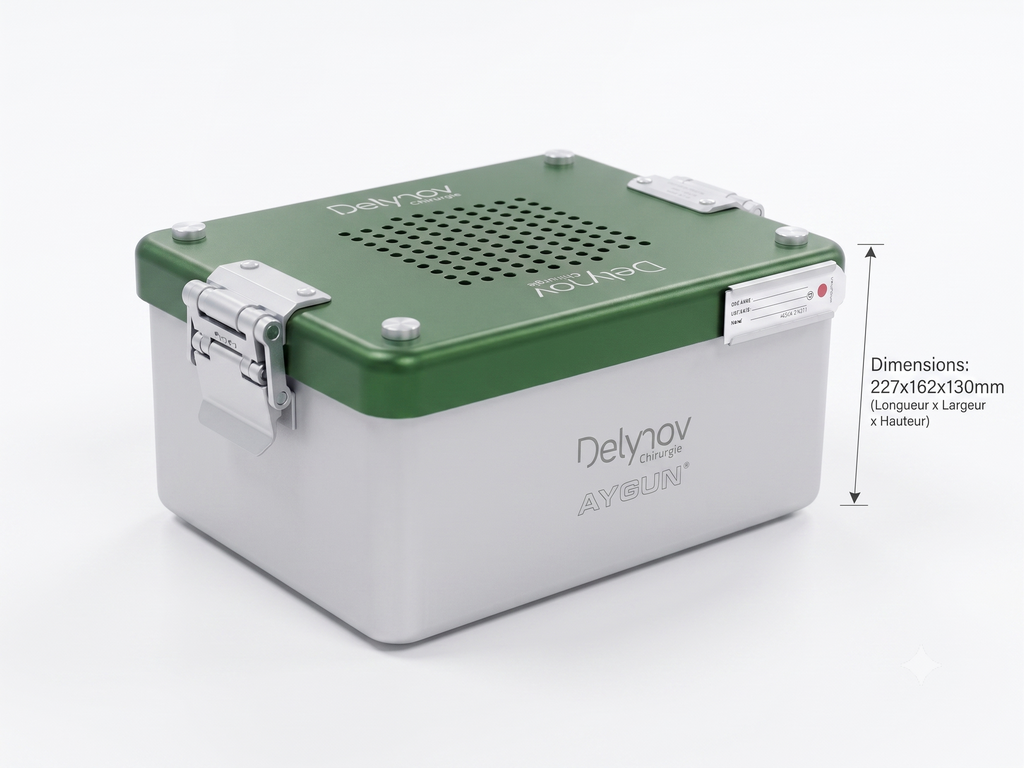
Container de stérilisation 227x162x130mm avec filtres Téflon - Couvercle Vert - Delynov (Aygün)
This container is designed for the packaging, sterilization, and secure storage of surgical instruments. It is used during autoclave cycles to ensure the integrity of the equipment required for implant placement or periodontal surgery until its use at the chairside.
- Teflon Filters: Integrated filtration device for maintaining sterility.
- Dimensions 227x162x130mm: Volume suitable for the packaging of compact surgical kits.
- Green Lid: Allows for visual organisation and rapid identification of dental surgical trays.
Compliance: . For healthcare professionals only, read the instructions for use before use.
What is the 227x162x130mm sterilization container with Teflon filters?
This sterilization container is an instrumentation management device designed for oral surgery environments. It features dimensions of 227x162x130mm, offering an optimized volume for the thermal processing of cassettes or bulk instruments. Its structure is completed by a green lid, facilitating the differentiation of surgical sets within the practice. The core technical element relies on the integration of Teflon filters, which play a crucial role in the sterile barrier process. This system allows the circulation of the sterilizing agent while preventing post-sterilization recontamination. Its robust design is intended to withstand repeated autoclave cycles while protecting delicate instrumentation against mechanical shocks during logistical handling between the sterilization area and the operating theatre.
What are the clinical indications for this device?
This container is indicated for all dental surgery, implantology, and periodontology procedures requiring the maintenance of a strict sterile chain. It is particularly useful for organizing implant surgery kits, diagnostic sets, or micro-surgery instruments. In clinical practice, it serves as a container during the steam sterilization phase (autoclave) and ensures the protection of the contents during storage. The use of Teflon filters is suitable for practitioners seeking a durable and high-performance solution for managing their surgical trays. This device allows for the efficient structuring of the surgical arsenal, ensuring that each instrument remains sterile and ready for use in interventions such as complex extractions, sinus lifts, or bone grafts, where asepsis is a determining factor for therapeutic success.
What are the technical characteristics of this container?
The technical specifications of this container are based on its precise dimensions of 227mm in length, 162mm in width, and 130mm in height. These measurements classify it as a compact container, ideal for standard dental practice autoclaves. The device is equipped with a green lid that serves as a visual marker for workflow organisation. The major innovation lies in the use of Teflon filters. Unlike disposable paper filters, Teflon offers high thermal and chemical resistance, ensuring stable steam permeability while maintaining an effective microbiological barrier. The locking system is designed to guarantee a perfect seal between the tub and the lid. The entire structure is engineered to withstand the pressure and temperature constraints inherent to hospital and practice sterilisation cycles.
What are the contraindications for using this container?
There are no direct medical contraindications for this type of packaging material, as it does not come into direct contact with the patient. However, usage contraindications must be observed to ensure process safety. It must not be used with sterilization methods incompatible with its materials, such as dry heat (poupinel) if specifications do not explicitly allow it. The use of damaged, obstructed, or incorrectly positioned filters constitutes a major technical contraindication, as it would compromise the sterility of the contents. It is also advised not to overload the container beyond its capacity, which could hinder steam circulation and impair cycle efficiency. Practitioners must systematically refer to the manufacturer's instructions regarding cleaning agent compatibility and validated sterilization parameters.
What are the precautions to be taken for maintenance and durability?
To ensure the longevity of this container and the effectiveness of the Teflon filters, several precautions are necessary. After each use, the container must be cleaned with neutral pH detergent solutions to prevent any corrosion or surface alteration. It is imperative to regularly inspect the condition of the seals and the integrity of the Teflon filters. Although Teflon is known for its durability, any sign of wear or perforation requires immediate replacement to preserve the sterile barrier. When loading the autoclave, containers should not be stacked in a way that blocks the filtration zones. Complete drying at the end of the cycle is a critical step to prevent oxidation of the internal instrumentation. Careful handling of the locking systems ensures that the necessary pressure on the seals is maintained throughout the post-sterilization storage period.
Who is the manufacturer and which standards are met?
This container is produced by a manufacturer specializing in sterilization devices for the medical and dental sectors. Although specific certifications (such as regulatory class or CE marking) are not detailed in the source data, this type of product is generally designed according to international standards governing sterile barrier systems. The materials used are selected for their biocompatibility and resistance to thermal decontamination processes. To obtain precise information on the ISO standards met, compliance with European medical device directives, or sterilization validation protocols, it is essential to consult the technical instructions provided by the manufacturer or contact support services. Compliance with the maintenance protocols recommended by the producer is essential to ensure that the device fulfills its microbiological protection functions in accordance with clinical requirements.